Recommend this page
image

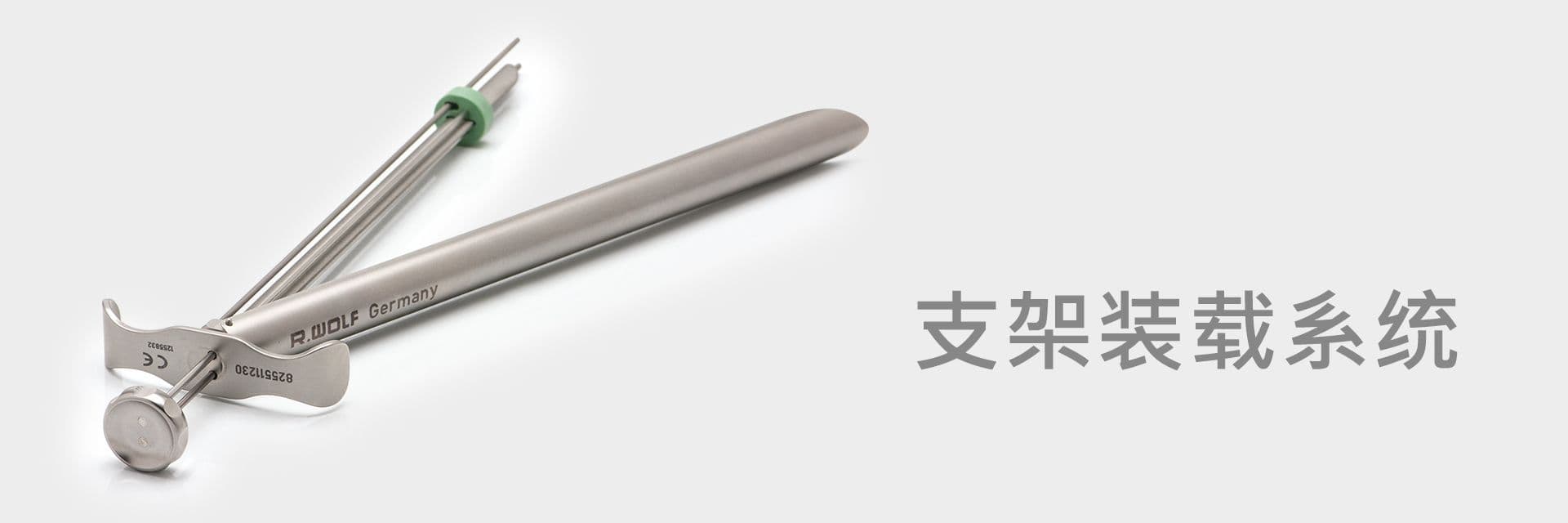
Stent Loading System

Fold, load, place – simple and practical

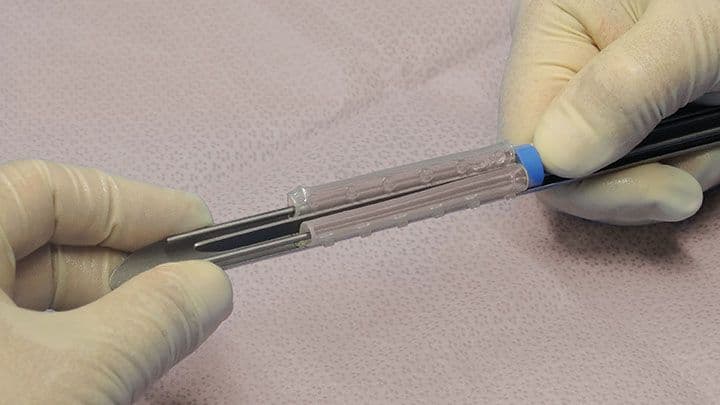
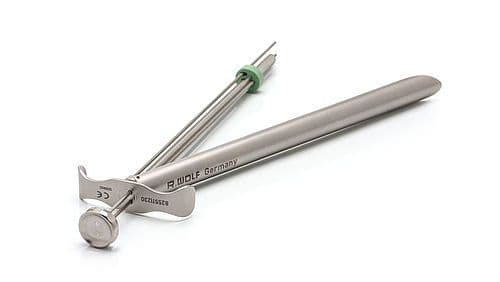
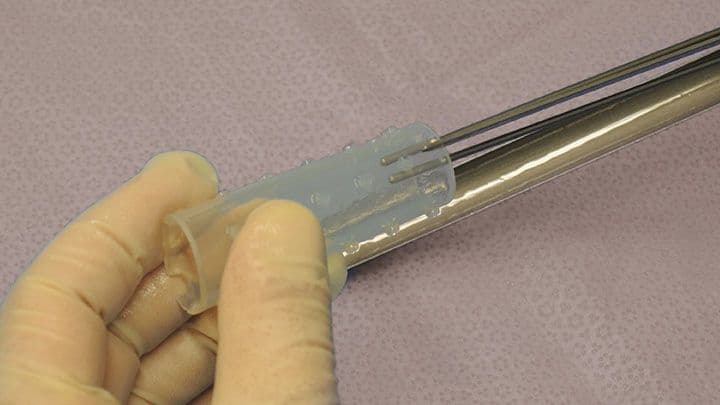
Easy handling is just one of the advantages of the new stent loading system. With this instrument set, silicone stents of different sizes can easily be folded and loaded into a rigid tracheoscope.

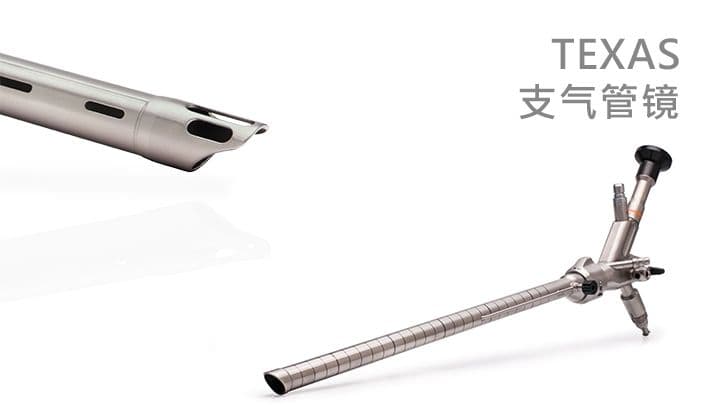
It works best with the "TEXAS" optical tracheobronchoscope and the new 300 mm tracheoscope tube designed especially for interventions.

Scale markings along the entire sheath make it easy to measure the length of a stenosis or tissue growth, so the correct stent length can be determined.


Because the telescope is integrated directly into the TEXAS tracheobronchoscope, the system now offers the unique ability to place all kinds of Dumon and silicone stents under visual control.

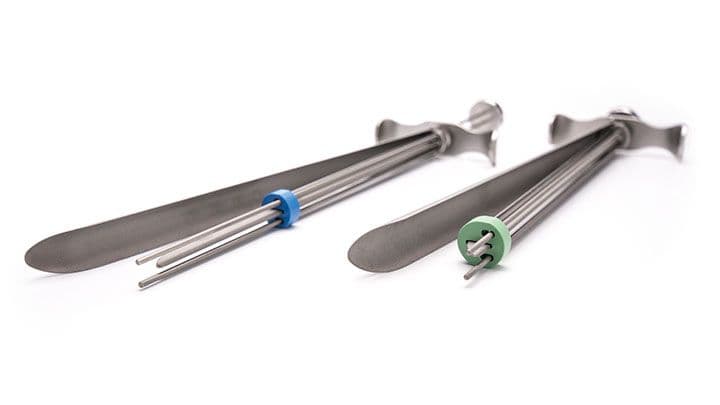
The new stent loading system is available in two sizes. The smaller system easily folds small Y-stents or tracheal and bronchial stents up to size 15 (with or without studs) and loads them into a 14 mm tracheoscope tube. The new large system is for silicone stents of size 15 and above.
Advantages at a glance

  • New, innovative stent loading system for tracheoscopy and bronchoscopy
  • Available in two sizes
  • For all kinds of silicone and Dumon bronchial and tracheal stents and Y-stents
  • Easy, orderly folding and loading of stents
  • For use with TEXAS and Hemer tracheoscopes
  • Stent placement under visual control (TEXAS tracheoscope)
  • Ergonomic design for fatigue-free work

Loading and placing silicone stents under visual control

  • Inserting the stent

    For tracheal or bronchial stents, insert the positioning rod into the lumen. For Y-stents, fold in both legs.

  • Folding the stent

    Push the guide rail toward the half-pipe guide with very little force, and the stent folds automatically. Simply push the color-coded pusher until it touches the stent to hold it in place.

  • Loading into the tube

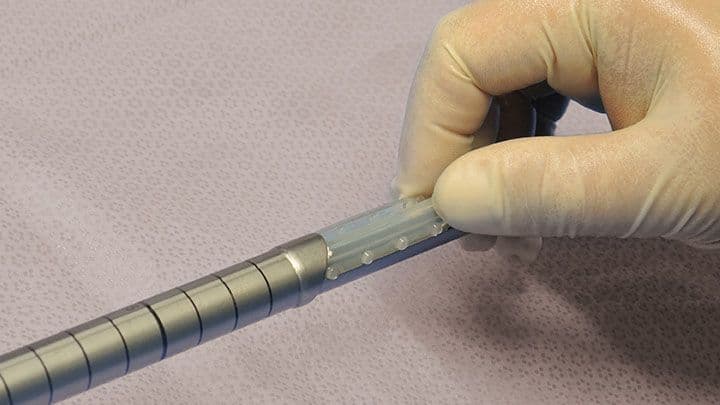
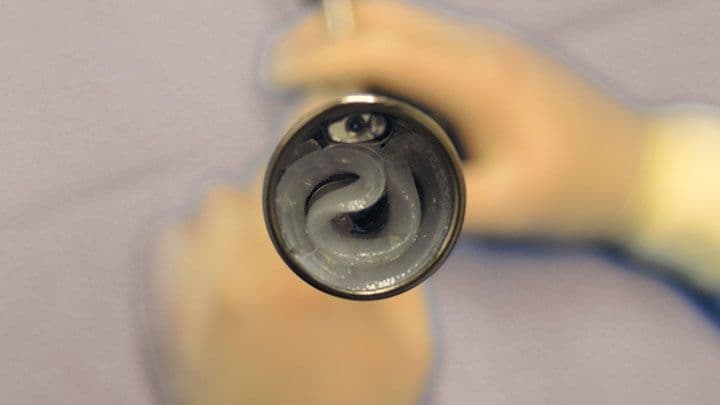
    Apply plenty of lubricant, introduce the loading system with the folded stent into the end of the tracheoscope tube and deposit the stent from the loading system.

  • Position in the tube

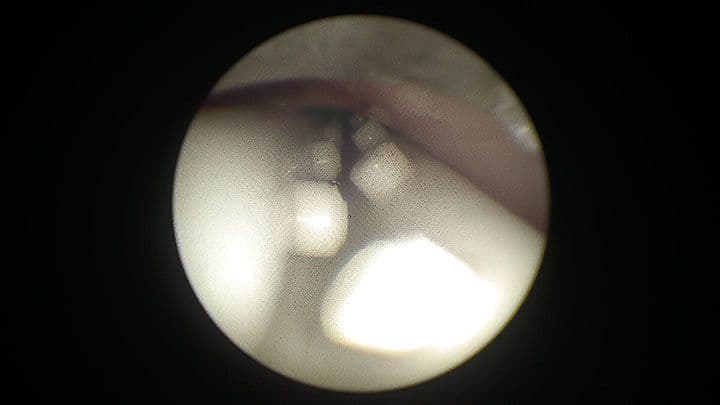
    The stent now sits in the tube below the telescope, with an unrestricted field of view, so the user can continue working under visual control.

  • Placing a tracheal or bronchial stent

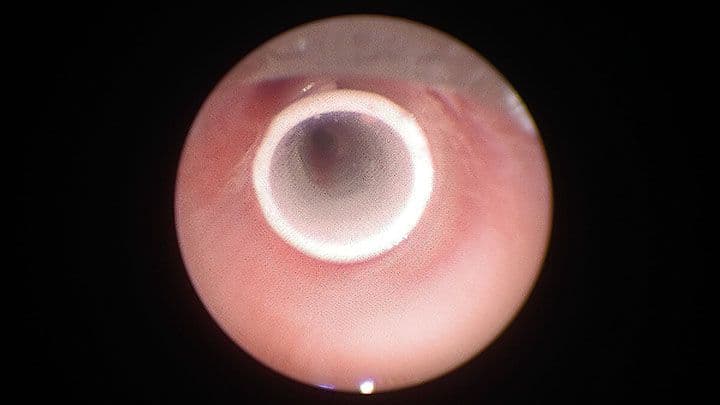
    When the desired position is reached, push the stent forward

  • Placing a tracheal or bronchial stent

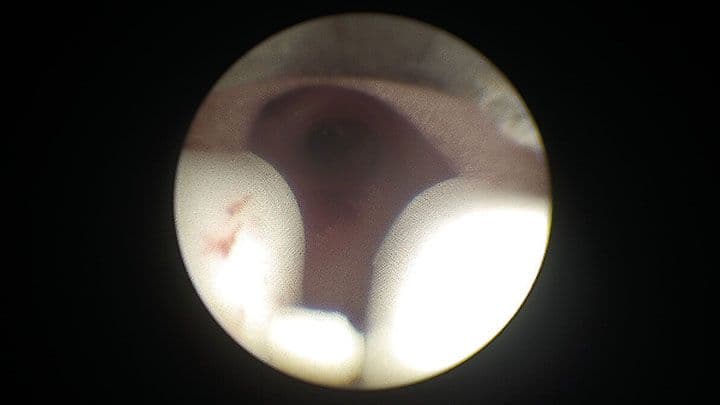
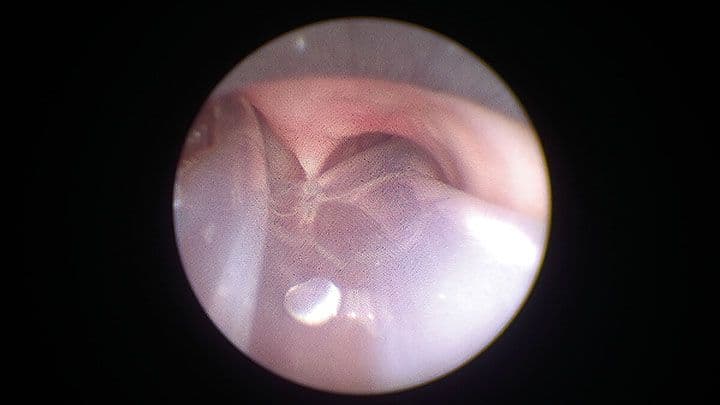
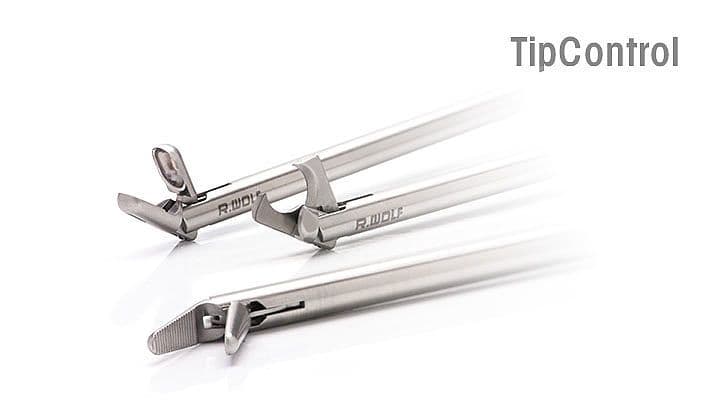
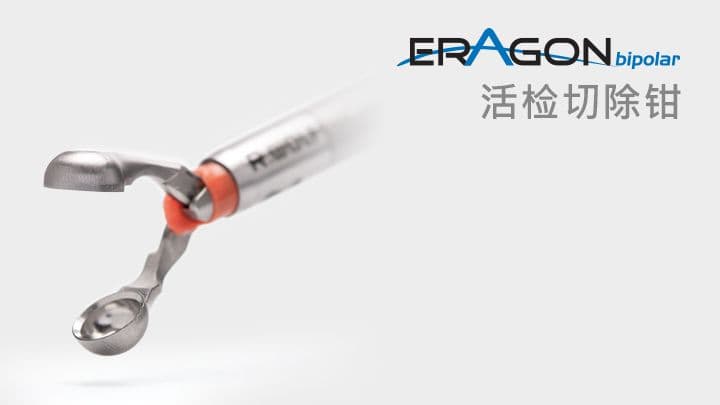
    and place it with the slightly opened forceps in the tube. Visual control is maintained throughout while the stent unfolds

  • Placing a tracheal or bronchial stent

    If necessary, the position can be corrected.

  • Placing a Y-stent

    When placing a Y-stent, the system

  • Placing a Y-stent

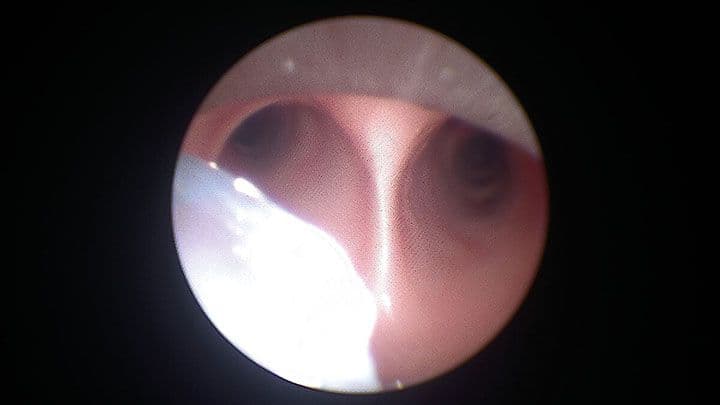
    makes it easy to keep both legs of the stent in view

  • Placing a Y-stent

    and position them correctly at the bifurcation

Downloads
Brochure
Stent Loading System
3MB PDF
Catalog
ENT
7MB PDF
Questions?We are ready to help!
Customer Service
hongkong@richard-wolf.com